
Your team doesn't need another AI demonstration. It needs a better way of working.
You've seen what AI can do — and so has your team.
But how do you turn individual experiments into a shared, reliable way of working when some people are enthusiastic, others are skeptical, and everyone is approaching it differently?
This practical, three-day customized workshop helps communications teams work more effectively with AI while protecting accuracy, institutional voice and human judgment.
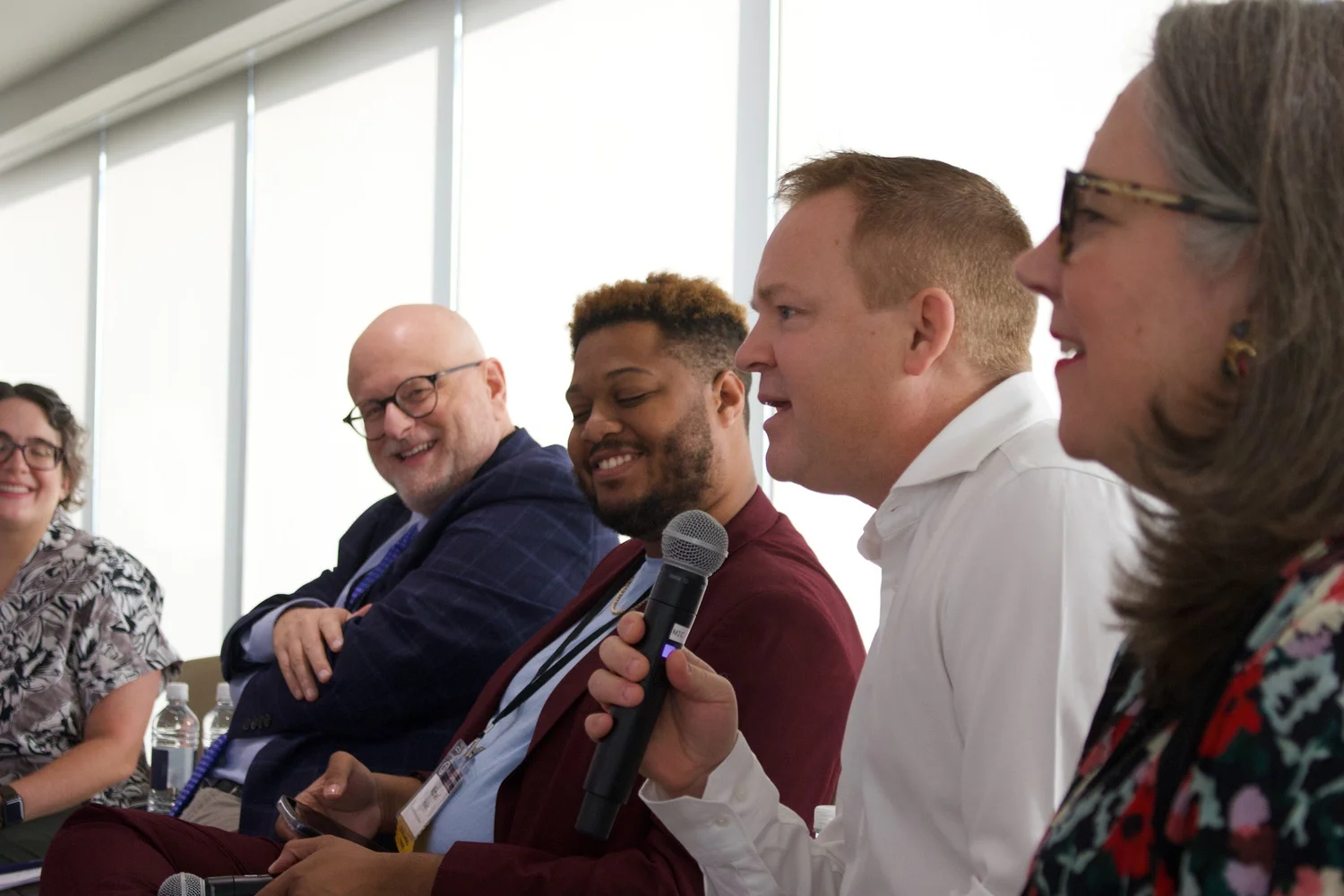
Everyone on your team is figuring out AI — on their own.
Every communications team seems to have one person who's way ahead of everyone else with AI.
But what happens when they're away? Or they leave?
Meanwhile, others are using AI occasionally, cautiously or not at all — and everyone is developing their own habits.
That creates some big challenges for the person responsible for the quality, accuracy and consistency of the team's work, such as:
Knowledge that stays with individuals
AI-savvy employees are great at developing useful techniques, but some like to keep it to themselves or are unsure how to share it. So the approach remains in personal accounts or someone's collection of prompts. The team never really benefits from what one person has learned.
Unclear boundaries and responsibilities
Who's checking the facts? Who decides whether something is reliable? What information should never enter an AI system? And who's accountable for the final result?
Your organization's voice
There's a difference between helping someone communicate more clearly and producing the same polished, generic material that AI seems to generate for everyone.
Introducing AI for Leadership Communications — Training for Teams.
One practical, customized program that turns individual experiments into a shared, reliable way of working — while protecting accuracy, institutional voice and human judgment.
Realistic communications challenges, practical exercises and discussion.
Delivered live online, with in-person delivery available on request.
Consecutive days, or spread over several weeks to give participants time to experiment and reflect.
Modules selected for your priorities, with exercises adapted to your approved AI environment.
From individual habits to a shared professional practice.
There's a peculiar assumption behind much of the discussion about AI and communications: either we hand our writing over to a machine, or we refuse to use it altogether. I don't buy it.
Useful doesn't mean authoritative.
As I discussed most recently at the Professional Speechwriters Association's World Conference in Washington, there's an enormous amount of work that happens before we write a word, and plenty more after we've written the last one. AI can be extraordinarily useful in all of it.
But using it well requires us to be more deliberate about what we trust, what we question, what we verify and what we ultimately decide. My goal isn't to turn everyone into an AI enthusiast — it's to give everyone a common understanding of where AI helps, where it doesn't and where people must remain in charge.
It starts with three questions that keep people in charge.
I don't teach prompt tricks — I teach a way of working.
AI tools and models change constantly. Your professional standards shouldn't have to change with them. These three questions apply to almost any communications task, whichever AI system your organization uses.

What are you trying to achieve?
Start with the purpose of the communication, not the tool.
What needs to change, become clearer or happen as a result of the work?
What does the AI need to know?
The evidence, audience, background, constraints and everything else the system cannot know unless you provide it.
What may it do, and what must it never do?
Where can AI contribute? What must a person check, decide or approve? And where must the system stop?
We then apply them across the communications process — research, analysis, verification, planning, testing and rehearsal — with human responsibility built in.
Then we build the program around your team's real work.
You don't need me to tell you that every team has different needs — and some of these challenges pre-date AI! Some teams are struggling with research and fact-checking. Others want to improve editorial workflows, maintain institutional voice or use AI more effectively for strategy and planning.
So the program has two parts. Core areas give everyone a common foundation. Optional modules from my wider library can be swapped in for the practical exercises. All of it is customizable, and the level of customization is reflected in the final cost.
Working with AI now
Understand how AI has changed, what today's systems can and cannot reliably do, and what that means for professional communications work.
Briefing, context and constraints
Learn how to give AI clear tasks, relevant background, reliable sources and explicit boundaries — without relying on elaborate prompt formulas.
Research and source grounding
Use AI to find, organize, question and explore information while keeping evidence visible and traceable.
Verification and human checkpoints
Develop stronger ways to challenge AI output and establish where people must verify, decide or approve.
Shared workflows and institutional voice
Explore how to turn useful individual practices into reusable team methods while maintaining consistency, accuracy and your organization's distinctive voice.
Strategy, message testing and preparation
Use AI as a thinking and rehearsal partner to test arguments, examine audiences, explore alternatives and prepare for difficult questions.
From the wider module library
Depending on your team's needs, we can also work on:
- Editing and improving difficult material
- Executive briefings and decision support
- Communications strategy and planning
- Audience analysis and message testing
- Crisis communications and scenario preparation
- Interview, panel and Q&A rehearsal
- Working with numbers and complex information
- Repeatable instructions, guided conversations and AI assistants
The result: more confidence, better judgment — and more ways to use AI.
These comments come from previous AI for Leadership Communications workshops. They are anonymous, but with their permission I can share more in our discovery call.
Brent's humble, engaging style made AI feel accessible and ethical. He didn't preach — he helped us think.
Before this, I was sceptical of AI. Now I use it confidently, knowing where it helps and where it doesn't.
Brent was an engaging instructor who effectively demonstrated how to leverage AI to our advantage without compromising our key roles as human speechwriters and executive communicators.
Taught by someone who still does the work.
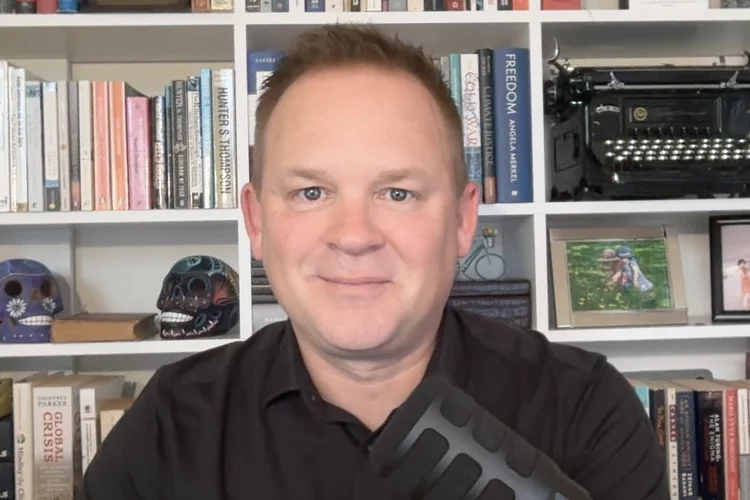
I'm Brent Kerrigan, an executive speechwriter and communications adviser with more than 20 years in senior communications, including six years as Head Speechwriter at UN Climate Change. I still write speeches and advise leaders today.
I'm not a technology consultant who has decided to teach communicators about AI. I'm a communicator who uses this technology every day and has spent a considerable amount of time figuring out where it genuinely helps us do our jobs better — and where it can get us into trouble.
For the past two years, I've been developing and teaching AI methods grounded in that work — continually testing, refining and adapting them as the technology evolves.
I teach AI from inside our profession, not from the outside looking in.
Three live sessions turn it into one shared way of working.
The standard program consists of three interactive, two-hour sessions, delivered online — on consecutive days, or spread over several weeks to give participants time to experiment and reflect.
Either approach works.
Getting the foundations right
How AI fits into professional communications work: Intention, Context and Authority, the Communications Chain, and the line between AI capability and human responsibility. Then research, source grounding and verification.
Building shared professional practices
Moving from individual habits toward a consistent approach across the team: shared instructions, editorial review, institutional voice and repeatable workflows.
Applying AI to your work
The communications tasks that matter most to your organization — strategy, executive briefings, message testing, interview and panel rehearsal.
Throughout the program, we work with realistic communications challenges, practical exercises and discussion.

And the learning stays with your team long after the sessions end.
- Three live, interactive sessions
- Practical exercises and demonstrations
- Supporting lessons and reusable instructions
- Session recordings, subject to agreement
- Downloadable reference materials
- Access to a private course resource area for an agreed period
Before we start, I learn how your team works.
The first conversation covers questions like these:
- What are people using AI for?
- Where are the frustrations?
- What are your organization's rules?
- Which systems are available?
- What would make the biggest difference?
I then recommend a program based on my established teaching methodology and the modules most relevant to your needs.
The training is platform-agnostic. I've worked with communications professionals using ChatGPT, Microsoft Copilot and other AI systems, including in restricted institutional environments.
You don't need to have all the answers before we talk — that's part of what the initial conversation is for.
Discuss your team's needs →Built for every level of AI confidence on your team.
My program is for communications teams and the people who lead them.
Participants rarely arrive with the same level of AI experience. Some will be enthusiastic, others skeptical, and most will be somewhere in between. No problem.
I'm not asking anyone to become a convert — just to bring an open mind, a willingness to experiment and the professional judgment they've spent their careers developing.
- Communications Directors and Heads of Communications
- Executive and leadership communications teams
- Corporate and internal communications teams
- Public affairs and media relations professionals
- Speechwriters and executive advisers
- Chiefs of Staff and teams supporting senior leadership
Before we talk, a few practical answers.
Is this suitable for a team with different levels of AI experience?
Yes. Establishing a common understanding is one of the main purposes of the training. Experienced users can deepen their practice, while colleagues who are less confident or more skeptical can explore the possibilities and limitations without pressure to become enthusiasts.
Is this a course about writing prompts?
Prompts are part of the foundation, but they're not the destination. The training focuses on designing tasks, providing context and evidence, establishing boundaries and developing useful methods that people can return to. The instructions we discuss will be applicable across the full spectrum of AI — from individual prompts to agentic use, to scheduled tasks and much more.
Does the training involve AI-generated writing?
We may use AI to explore language, test messaging against audiences and examine alternatives. But the training is not built around handing the writing over to AI. The focus is on the broader communications process, with people retaining responsibility for editorial choices and final approval.
Can you work with Microsoft Copilot or our internal AI system?
The methodology is designed to work across different AI platforms. We'll discuss your organization's approved systems, permissions and technical constraints before finalizing exercises. Some capabilities depend on the particular environment. But in general, I've delivered this training to large organizations who have rigorous internal AI systems (and yes, Copilot).
Do you need access to our confidential documents?
Absolutely not. We can use approved, sanitized or fictional examples when required. Any use of organizational material is agreed in advance and must comply with your internal policies. But generally I will use examples that are already publicly available on your website.
How customized is the program?
The core methodology is established. We select and adapt practical modules around your team's needs and approved tools. If substantial new curriculum development is required, we discuss and scope that separately.
How much does it cost?
Every institutional engagement is quoted individually, based on the agreed program, participant group and preparation requirements.
We begin with a conversation to establish what would be most useful before preparing a proposal.
Is the training available internationally?
Yes. I'm based in Geneva and work with communications professionals and organizations internationally. The standard program is delivered live online, but I am open to doing it live in-person. Costs of travel and accommodation are covered by the client and will be in addition to the proposed fee for the workshop.
Your team is already figuring out AI. Let's help them figure it out together.
You don't need to know exactly what the workshop should contain before getting in touch.
Tell me a little about your team, what you're dealing with and what you'd like to improve.
We'll have a conversation about your needs, the systems you're using and whether my approach would be a good fit.
If it makes sense to proceed, I'll recommend a program built around your priorities and provide a clear proposal.
What I won't do is offer outlandish promises of overnight transformation. Nor an expectation that everyone must love AI.
Just practical, serious training to help communications professionals work more effectively with technology while retaining the judgment and responsibility that define our profession.

Tell me about your team.
Brent Kerrigan — Geneva, Switzerland · Working globally
Looking for training as an individual?
Explore AI for Leadership Communications — Individuals, my live workshop for speechwriters, executive communicators and other professionals who want to develop their own approach to working with AI.