
Executive speechwriter. AI trainer. Twenty years inside the work.
For more than twenty years, I’ve worked inside senior communications — in government, international organizations, climate diplomacy and executive leadership.
Today I do two things: I write for leaders, and I help communications professionals work with AI more professionally. They are distinct practices, but they draw on the same experience: understanding how serious communications work gets done, where judgment sits, and what happens when the words have consequences.
I'm Canadian. I'm based in Geneva. I work globally.
Teaching what I use.
I started teaching AI for communications for a simple reason: I was using it, I had a clear view of what it could and couldn't do, and I noticed that much of what was being said about it to communicators was either overblown or disconnected from how senior communications works.
Today, AI for Leadership Communications is my training and advisory practice for speechwriters, executive communicators and communications teams. The focus is not prompt tricks. It is how AI fits into real professional work — research and analysis, source grounding, strategy, voice, rehearsal and repeatable workflows.
I teach communicators to be deliberate about three things: what they are trying to achieve, what the AI needs to know, and which decisions must remain human. AI can strengthen the work. It does not inherit responsibility for it.
I teach this the same way I approach writing. No hyperbole. No drama. No evangelism. Just a serious look at where AI helps, where it does not, and where professional judgment still has to lead.
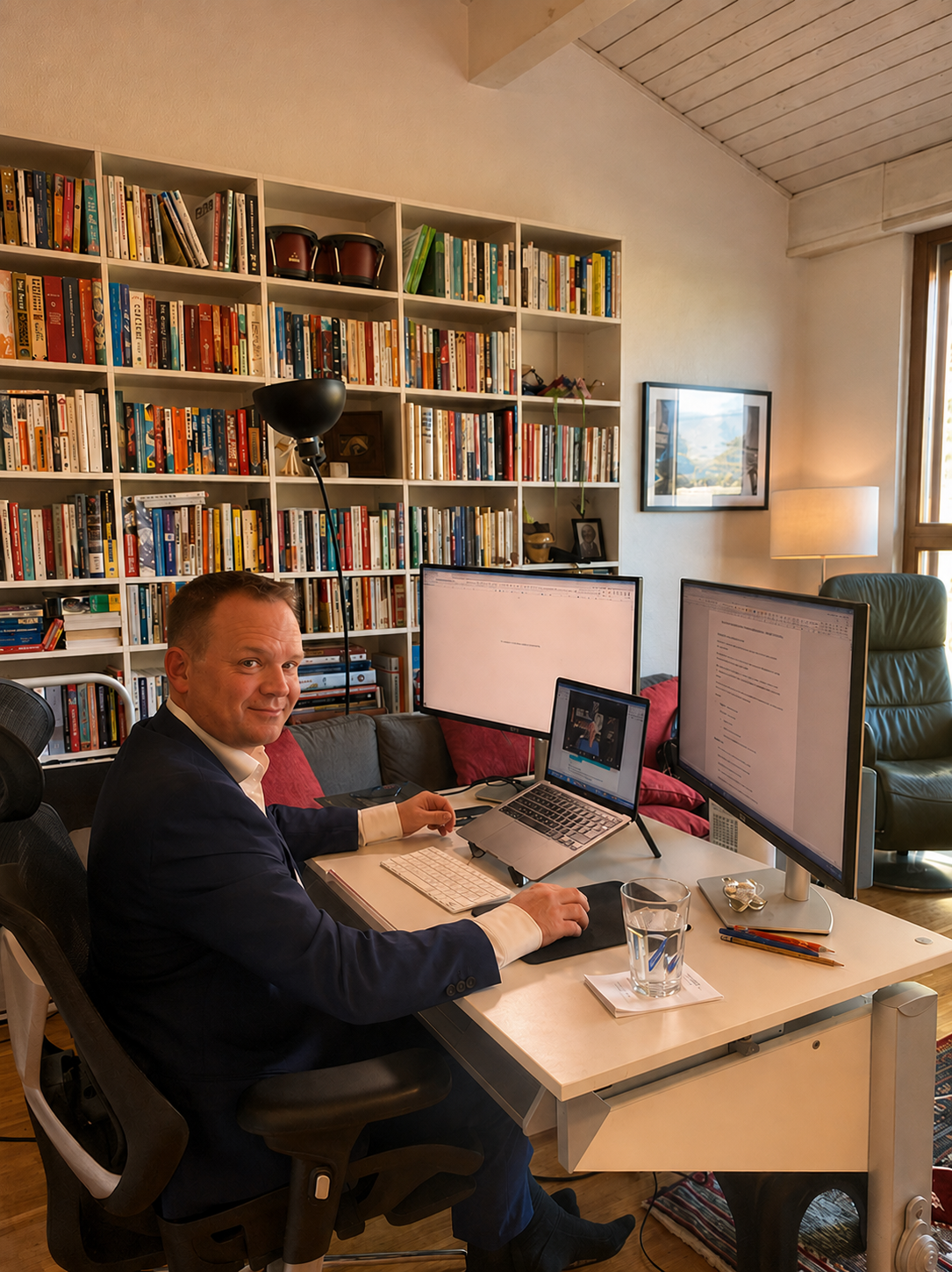
AI has made competent writing abundant. Judgment still matters.
AI has changed the economics of producing words. Competent copy can now be generated in seconds. But producing words was never the whole job.
The harder parts remain: judgment. Evidence. Nuance. Voice. Strategic instinct. Knowing what matters, what is true, what a particular audience needs, and what a leader should say in a specific moment.
That is not an argument against using AI. I use it myself. It is an argument for being precise about the difference between what AI can do and what we are prepared to let it decide.
That's what I teach. And it's what I still do every day as a working speechwriter.
Two decades inside the machine.
I spent the first half of my career developing as a writer and strategist inside government, international organizations and communications leadership roles — in environments where the stakes were real and the margins for error were small.
Nearly a decade of that was with the Government of Canada, writing ministerial-level speeches and occasionally contributing to speeches for the Prime Minister's Office. I also served as Communications Manager at CEMUNE in Hamburg and onepoint5, with offices in Bonn and Madrid, leading communications strategy and external messaging.
From 2017 to 2023, I served as Head Speechwriter at UN Climate Change — the UNFCCC. Over six years I supported successive Executive Secretaries through some of the most closely watched moments in global climate diplomacy: the first U.S. withdrawal from the Paris Agreement and its eventual return; the emergency relocation of COP25 from Santiago to Madrid; the COVID-19 pandemic and its disruption of international diplomacy; and the transition from negotiating the Paris Agreement to putting it into practice.
Since then, I have written for the International Telecommunication Union, the Green Climate Fund, the OPEC Fund and senior leaders across the public, international and private sectors. Private-sector work has included the CEO of a Fortune 500 company, while other assignments have taken me into development, education, philanthropy and mental-health advocacy.
Before this, there was Global Speechwriter.
I’m not new to online training. In the mid-2000s, I launched Global Speechwriter and was among the first people teaching speechwriting online. Several colleagues I now work with through the Professional Speechwriters Association were exploring the same ground. Today, the PSA and I partner in several areas, including AI for Leadership Communications.
The idea behind it remains important to me: location matters far less than whether the training understands the work. The technology has changed enormously, while purpose, audience, voice, evidence, structure, creativity — and, on the best days, inspiration — still sit at the heart of good speechwriting and communications.
Our job is to learn what the new tools can add, keep what helps, and protect the standards and craft the work depends on.

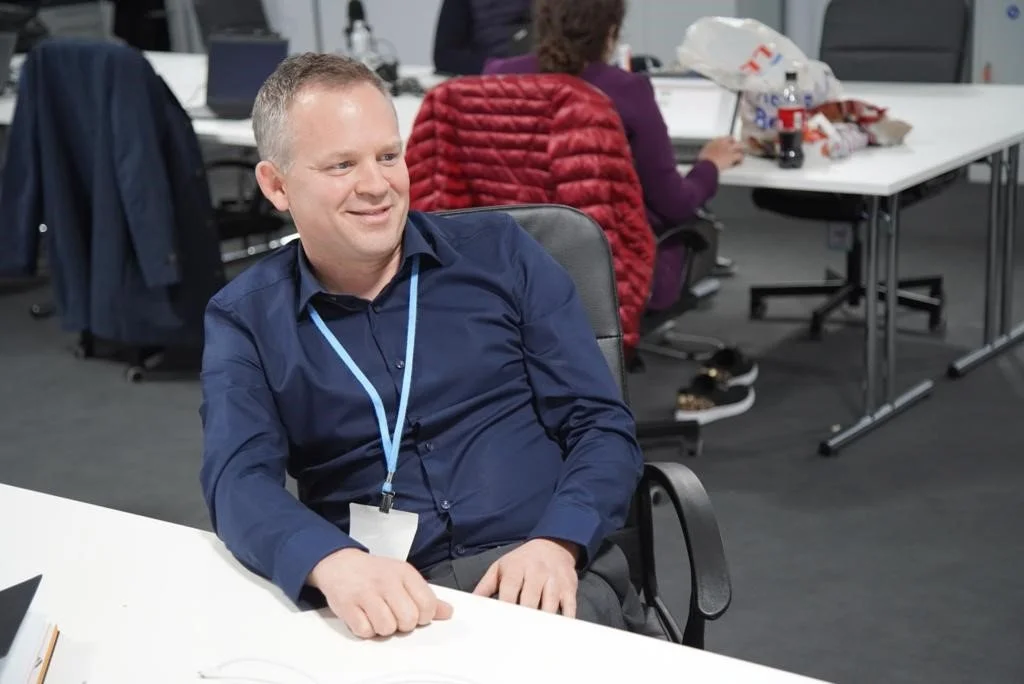
Still at the desk. Still in the work.
I still take on a small number of executive speechwriting clients each year. These are typically leaders at pivotal moments — a major policy address, a summit keynote or a high-visibility publication — who need someone with direct experience inside complex institutions and a clear understanding of what it means when the words have to be right.
If that sounds like your situation, I'd love to hear more. Every conversation is confidential, with no obligation.
Canadian. Based in Geneva. Working globally.
If you need a speech written, want to develop your own AI practice, or want to explore how your communications team could work with AI more professionally, I'd be glad to hear from you. Every conversation is confidential, with no obligation attached.
(Way) Beneath The Fold

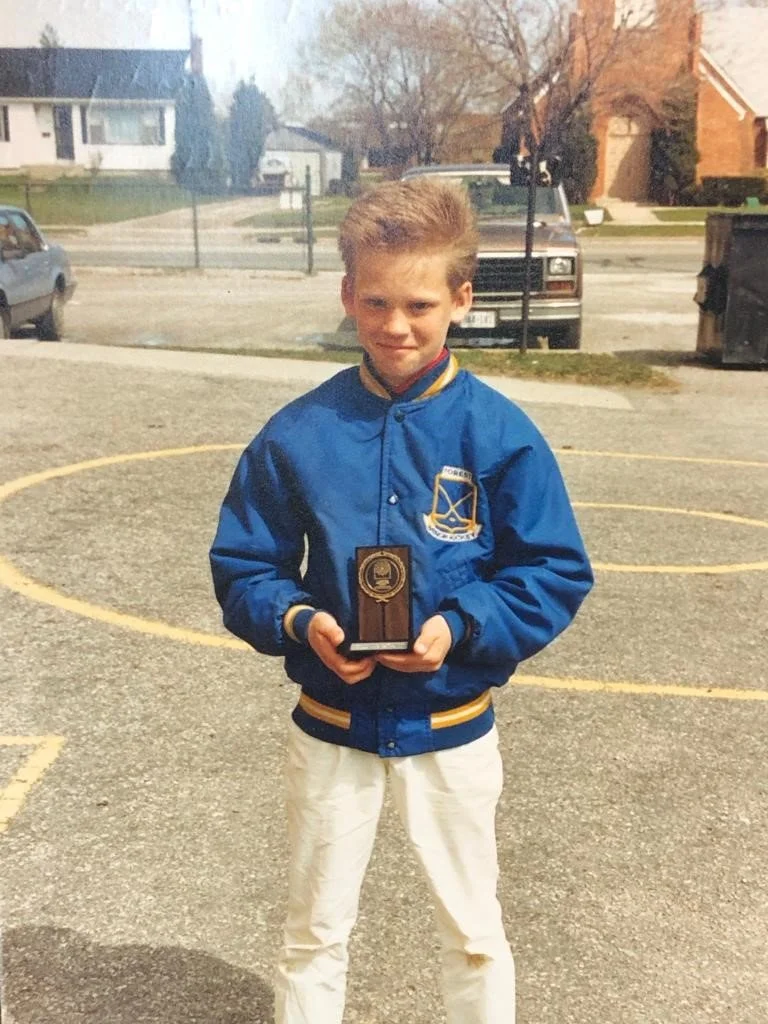
Been at it since Grade Four. My speech about being a baseball won a few contests back in 19(removed!).