
Using AI is easy. Using it professionally is harder.
Practical AI training for the people who communicate on behalf of leaders — executive speechwriters, executive communicators, communications advisers and the teams that support senior leaders.
Most communicators are already using AI. The harder question is how to use it across the work — for research, analysis, strategy, verification, voice and rehearsal — without surrendering professional judgement.
The gap is no longer adoption. It is professionalisation.

You're probably not starting from zero.
The people I work with are usually already using AI. What differs is how far they have moved from occasional use to deliberate professional practice.
“I use it — mostly for bits and pieces.”
Drafting, rewriting, summarising, brainstorming and basic research. You know it can do more, but you're not always sure where it belongs in the rest of the communications job.
“My team uses it. I don't know whether we're using it well.”
Some people are sophisticated users. Some barely touch it. Everyone has developed their own habits, but there is no shared standard for context, verification, judgement or workflow.
“I'm already good at this. Show me what comes next.”
You want to move beyond individual prompting into deeper analysis, reusable workflows, connected sources, decision support and automation where it improves the work.
Different starting points. The same question: how should professional communications work now that AI is part of the environment?
What professional AI use actually looks like.
Writing is only one part of leadership communications. I teach communicators to use AI across the wider job — including the parts where understanding, testing and judgement matter more than generating copy.
Research & analyse
Understand difficult material, compare information, identify patterns and ask better questions before writing.
Ground & verify
Work from reliable evidence, trace claims back to sources and know what still needs a human check.
Think strategically
Pressure-test arguments, audiences, risks, alternatives and assumptions before the stakes are real.
Protect voice
Use AI without flattening a leader or organisation into polished generic language that could belong to anyone.
Prepare & rehearse
Use AI as an interviewer, critic, audience and sparring partner — not simply as a writing assistant.
Build repeatable workflows
Move beyond isolated tricks into ways of working that can be reused.
I don't teach prompt tricks. I teach a way of working.
Tools will change. Models will change. Features will change. Whatever the task, I keep bringing communicators back to three questions.
What are you actually trying to achieve?
Start with the communications objective — not the AI tool.
What does the AI need to know?
Give it the evidence, audience, constraints and background required to be useful.
What should AI help with — and what stays human?
Be deliberate about what the system assists with and which decisions still require professional judgement.
Those questions travel across the whole job: research, analysis, strategy, drafting, verification, voice, rehearsal and workflow.
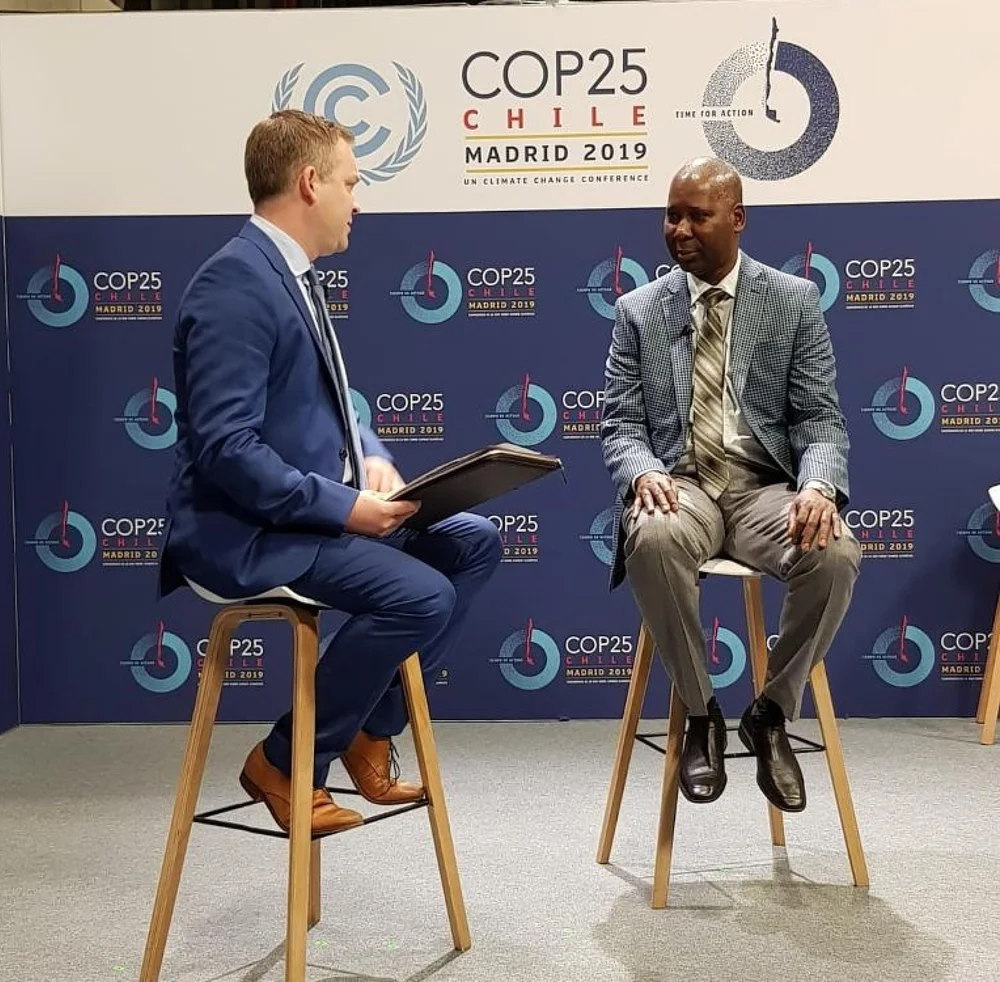
Taught by a working communicator.
I've spent more than twenty years inside senior communications, including six years as Head Speechwriter at UN Climate Change, and I still write for senior leaders today.
I began teaching AI because I was using it in the work myself — and because much of the advice being given to communicators bore little resemblance to how executive and leadership communications actually gets done.
For more than two years, I have worked with the Professional Speechwriters Association to train speechwriters and leadership communicators. Participants have included professionals working in major global technology, financial services and manufacturing companies, as well as government, international organisations, research institutions and the wider public sector.
I teach AI from inside the profession, not from outside it.
Are you strengthening how you work with AI — or aligning a team?
These are different problems. Choose the route that fits what you need.
Strengthen how you use AI in your communications work.
Live learning for executive speechwriters, executive communicators and other leadership communications professionals who want to use AI more deliberately across the work.
- Go beyond drafting and rewriting
- Build stronger research and verification habits
- Use AI for strategy, voice and rehearsal
- Develop workflows you can reuse
Build alignment across your communications team.
Different people use AI differently. The goal is not to make everyone use it identically. It is to develop a shared professional approach to where it helps, how work is verified and where human judgement remains visible.
- Reduce uneven practice across the team
- Create clearer standards and expectations
- Map AI onto real communications workflows
- Make good practice repeatable

Workshops shaped by communicators themselves.
For more than two years, I have taught executive speechwriters, communications directors, advisers and other senior practitioners working inside some of the world's largest and most complex organisations.
Different organisations. Different constraints. The same requirement: the evidence matters, the words matter and the judgement cannot be outsourced.
From those who've been through the training.
Brent's humble, engaging style made AI feel accessible and ethical. He didn't preach — he helped us think.
Before this, I was sceptical of AI. Now I use it confidently, knowing where it helps and where it doesn't.
I found the how aspect of this course very thorough, engaging and useful. I came away with ideas about how to engage an AI model effectively that I would not have come to on my own.
Brent was an engaging instructor who effectively demonstrated how to leverage AI to our advantage without compromising our key roles as human speechwriters and executive communicators. The library of prompts he shared was invaluable.
I was amazed at how many executive communications AI use cases Brent covered. A deeper understanding of how to write prompts to get better AI output is invaluable.
The prompts were the star of the show — a toolkit I use daily now. This training changed how I work.
A few things worth knowing.
Do I need to be advanced with AI?
No. You should be using AI or ready to use it, but you do not need to be a power user. Newer users learn the fundamentals; experienced users are pushed considerably further.
Is this mainly about prompting?
No. Prompting still matters, but it is only one part of the work. The focus is the wider professional communications process and the judgement required around it.
Which AI tools do you teach?
We work with leading general-purpose AI systems and relevant specialist tools, but the emphasis is on practices that remain useful even as individual products and models change.
Do you work with teams as well as individuals?
Yes. Individual professional development and team alignment are different problems, so the formats are different. Team work is built around how your communications function actually operates.
Request a discovery call.
We can talk through the challenges you or your team are facing, whether my approach is a good fit, and — for team engagements — what the training should look like in your organisation rather than forcing you into an off-the-shelf programme.
Work with AI without handing over the work.
Whether you're developing your own capability or building a more aligned approach across a communications team, tell me a little about where you are now and what you want to improve.